
You've found mold: a gray patch behind the bathroom vanity, spots on a closet wall, a dark corner in the laundry room. The first question most people ask is whether they can just clean it up themselves. Often the answer is yes. The U.S. Environmental Protection Agency (EPA) gives homeowners a simple size test, and knowing it can save you money, or keep you from making a bigger problem worse.
Huntsville Mold Experts is a free quote service. We connect Huntsville-area homeowners with independent local mold inspection and remediation companies for free, no-obligation quotes. If your mold falls on the "call a professional" side of the line, we can help you compare quotes. If it doesn't, this guide should help you handle it with confidence.
The EPA 10-square-foot rule
EPA's homeowner guide, A Brief Guide to Mold, Moisture and Your Home, sets the dividing line by size: "If the moldy area is less than about 10 square feet," a homeowner can usually handle the job. Larger areas follow EPA's professional guidance, Mold Remediation in Schools and Commercial Buildings.
Ten square feet is smaller than many people picture. It's roughly a 3-foot by 3-foot patch, about the size of a small bathroom mirror. Add up every patch in the affected area, not just the biggest one. Several dinner-plate-sized spots along one wall can add up quickly.
Size isn't the only test
A spot under 10 square feet is a good DIY candidate, but some situations call for a second opinion even when the visible area is small:
- The water problem isn't fixed. EPA is blunt: "If you clean up the mold, but don't fix the water problem, then, most likely, the mold problem will come back." If you can't find or stop the leak, cleaning is only a temporary fix.
- It's in or around the HVAC system. EPA says: "Do not run the HVAC system if you know or suspect that it is contaminated with mold - it could spread mold throughout the building." In Alabama, cleaning heating and air-conditioning equipment or ducts requires HACR certification. See mold in AC vents.
- The material is soaked. ADPH's flood guidance says: "Materials that are wet and cannot be thoroughly cleaned and dried should be discarded." Wet insulation, carpet pad and saturated drywall usually fall into that group.
- It followed a flood or storm. Flood water usually means a larger area than you can see. Our guide to the 24–48 hour window after a storm or flood covers the drying timeline.
- Someone in the home is sensitive. ADPH notes that people with asthma, allergies or breathing conditions may be more sensitive to mold, and that those with mold allergies or asthma should not clean moldy materials. If you have health concerns, talk with a doctor.
- The house is older. Cutting out drywall, joint compound, flooring or textured ceilings in an older home can raise asbestos or lead-paint rules. Alabama requires ADPH certification for firms doing lead-based paint renovation in pre-1978 homes, and asbestos work falls under the Alabama Department of Environmental Management (ADEM). Ask before you cut.
How to handle a small mold patch yourself
For a small area on a surface you can reach, the job comes down to four steps:
Find and fix the moisture
Look for the source first: a dripping trap, a failed caulk line, a sweating pipe, condensation on a cold wall. EPA says it's important to dry water-damaged areas and items within 24–48 hours to prevent mold growth, and ADPH says, "As soon as possible, begin drying any materials that are wet."
Protect yourself
An older ADPH flood-season release advised gloves, goggles and an N-95 respirator for cleanup. Keep children and pets out of the room while you work.
Clean or remove the material
Hard, non-porous surfaces can usually be cleaned. Porous materials that stayed wet, like drywall paper, ceiling tiles and insulation, are often better removed and replaced, in line with ADPH's advice to discard what can't be thoroughly cleaned and dried.
Dry it and watch it
Dry the area completely and check it again over the next few weeks. If the growth comes back, the moisture source probably hasn't been solved.
Do you need to test the mold first?
No. EPA says: "In most cases, if visible mold growth is present, sampling is unnecessary." It also notes, "No EPA or other federal limits have been set for mold or mold spores," so there's no official number a test result can be compared against. ADPH's position is simple: "Testing for molds is not recommended." Either way, the plan starts in the same place: fix the water and clean up the growth. More in Do you need mold testing?
Why Huntsville homes see mold
North Alabama's climate keeps moisture in play most of the year. NOAA's 1991–2020 normals for Huntsville International Airport show 54.29 inches of precipitation a year, with the wettest months in winter and early spring (December averages 5.87 inches). Summer brings the humidity: average dew points near 66°F in June and about 70°F in July. That muggy air condenses on cool surfaces like AC ducts, crawl-space framing and basement walls, which is general building science rather than a NOAA finding. Small, recurring spots in bathrooms, closets and around HVAC equipment are common, and so are crawl space problems. See crawl space mold in North Alabama.
When the job is bigger than 10 square feet
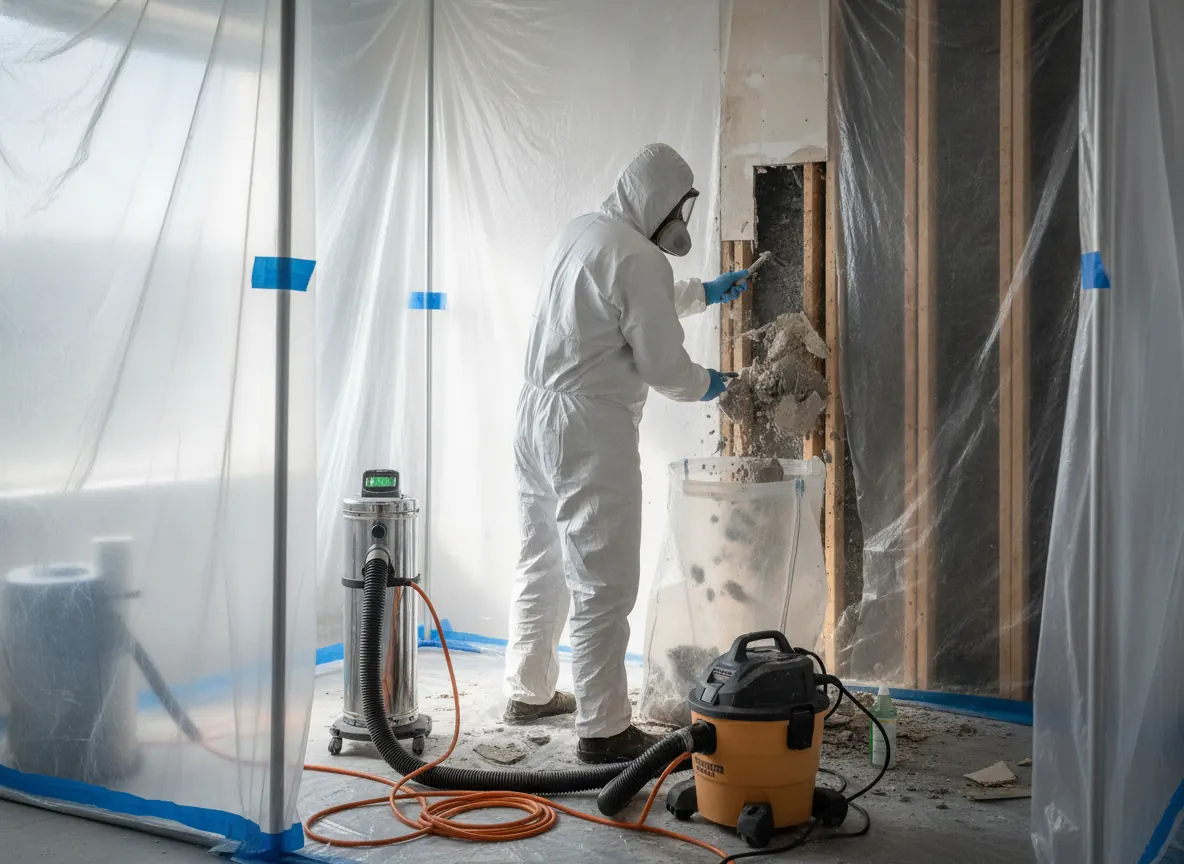
Above about 10 square feet, EPA points to professional-level guidance, which typically means containment, removal of damaged material, cleaning and drying, all built around fixing the moisture source. Our process page walks through what that usually looks like, and the mold removal page covers the service in more detail.
Alabama does not license mold remediation companies. ADPH suggests looking for IICRC-certified firms; ask any company for its training and certifications, insurance, and an HBLB license number for rebuild work over $10,000. EPA adds: "make sure the contractor has experience cleaning up mold."
DIY vs. professional cost
Typical national ranges from This Old House (2026), Fixr (2025) and Bob Vila (2024), estimates, not quotes:
| Item | Typical range |
|---|---|
| Per square foot | $10–$30 |
| By size: 50 / 100 / 200 / 500 / 1,000 sq ft | $500–$1,250 / $1,000–$2,500 / $2,000–$5,000 / $5,000–$12,500 / $10,000–$25,000 |
| Mold remediation, typical job | $1,200–$3,750 (This Old House avg about $2,300); Fixr $1,500–$9,000, avg about $3,500 |
A small, dry patch you can safely clean yourself costs little beyond supplies and time. The cost guide covers attics, basements, crawl spaces and whole-house jobs.
Frequently asked questions
Can you do mold remediation yourself?
Often, yes, for small areas. EPA's homeowner guide says that if the moldy area is less than about 10 square feet, a homeowner can usually handle it. Fix the moisture source first, protect yourself, and remove porous materials that stayed wet. Larger areas, HVAC contamination or flood damage usually call for a professional.
How big is 10 square feet of mold?
About a 3-foot by 3-foot patch. Add up all the patches in the affected area, not just the largest, since several small spots on one wall can quickly pass 10 square feet. Hidden growth behind drywall or under flooring may also be larger than what you can see.
Should I test mold before cleaning it?
Usually not. EPA says that in most cases, if visible mold growth is present, sampling is unnecessary, and no federal limits exist for mold or mold spores. ADPH says testing for molds is not recommended. The fix is the same regardless of type: stop the moisture and clean up the growth.
When should I not clean mold myself?
Call a professional for areas over about 10 square feet, mold in the HVAC system, flood-soaked materials, or when you can't find the water source. ADPH advises that people with mold allergies or asthma should not clean moldy materials. In older homes, ask about asbestos or lead paint before cutting into walls.
Bigger than 10 square feet? Compare quotes
If your mold is past the DIY line, a free, no-obligation quote request takes about a minute. We usually reply the same day, and you decide whether to move forward. You can also call: Call (727) 300-6656.