
Mold Removal & Remediation in Huntsville, AL
We connect Huntsville-area homeowners with independent local mold inspection and remediation companies for free, no-obligation quotes. Here is how professional mold removal works, what it typically costs, and what to ask before you hire.
Get a Free Quote Call (727) 300-6656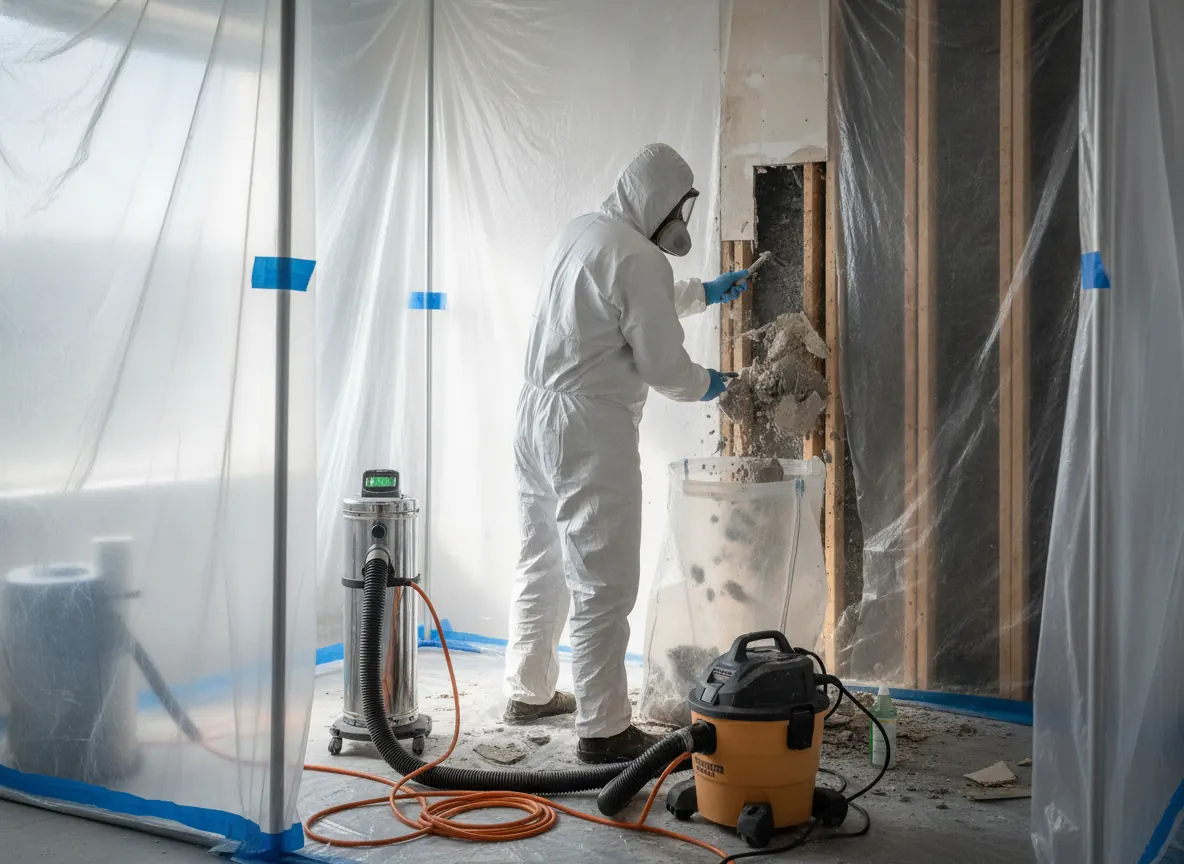
What mold remediation actually involves
Mold remediation is more than spraying a cleaner on a stain. A sound job does three things: it keeps spores and dust from spreading while the work happens, it physically removes the growth and the materials that can't be saved, and it stops the moisture that let mold grow in the first place. Miss any one of those and the problem tends to return.
Huntsville's climate makes the moisture step especially important. NOAA's 1991–2020 normals for Huntsville International Airport show 54.29 inches of rain a year, and average summer dew points around 66–70°F from June through August. Muggy air like that can condense on cool ducts, framing and walls, so the “why is it wet?” question matters as much as the cleanup.
The three parts of a proper mold removal job
1. Containment
On larger jobs, remediation companies typically seal the work area with plastic sheeting and a zipper door, and often run air scrubbers with HEPA filters to keep the area under negative pressure. That way, disturbing moldy drywall or insulation doesn't send spores into the rest of the house.
2. Source removal
Porous materials with mold growing in them, such as drywall, insulation and carpet pad, are usually cut out and bagged rather than cleaned. Hard surfaces like framing are generally cleaned and dried. ADPH's flood guidance puts it plainly: “Materials that are wet and cannot be thoroughly cleaned and dried should be discarded.”
3. Fixing the moisture
This is the step that keeps mold from coming back. The EPA warns: “If you clean up the mold, but don't fix the water problem, then, most likely, the mold problem will come back.” The fix might be a plumbing repair, a roof repair, better drainage, a dehumidifier or crawl space work.
Want the full step-by-step? See how the remediation process works.
EPA's 10 square foot guidance: DIY or call a pro?
The EPA's A Brief Guide to Mold, Moisture and Your Home says that “if the moldy area is less than about 10 square feet” (roughly a 3 ft by 3 ft patch), a homeowner can usually handle the cleanup. Larger areas fall under EPA's guidance for professional remediation. A few cases point toward a professional even when the patch is small:
- The growth is inside walls, in HVAC ducts or under flooring.
- The moisture came from sewage or contaminated floodwater.
- Someone in the home has asthma, allergies or breathing problems. ADPH says people with mold allergies or asthma should not clean moldy materials.
- You can't find or fix the water source yourself.
The EPA also says not to run an HVAC system you know or suspect is contaminated with mold, because it could spread mold through the building. For health concerns, talk with your doctor. Our DIY vs. pro guide covers the 10 square foot rule in more detail.
What mold removal typically costs
Typical national ranges from This Old House (2026), Fixr (2025) and Bob Vila (2024) — estimates, not quotes.
| Item | Typical range |
|---|---|
| Mold remediation, typical job | $1,200–$3,750 (This Old House avg about $2,300); Fixr $1,500–$9,000, avg about $3,500 |
| Per square foot | $10–$30 |
| By size: 50 / 100 / 200 / 500 / 1,000 sq ft | $500–$1,250 / $1,000–$2,500 / $2,000–$5,000 / $5,000–$12,500 / $10,000–$25,000 |
| Whole house | $10,000–$30,000 |
Your price depends on the size of the affected area, how much material has to come out, access, and whether rebuild work is part of the job. The full mold remediation cost guide breaks it down by room.
Alabama rules: licensing, HBLB and rebuild work
ADPH says: “Currently, there are no Alabama laws concerning residential or commercial building mold standards or testing requirements, nor is there any contractor accreditation/certification for contractors performing mold testing or remediation activities.” In other words, Alabama has no mold license.
Rebuild work is different. Under Alabama's Home Builders Licensure Board (HBLB) law, residential construction, repair or improvement work over $10,000 (roofing over $2,500) requires an HBLB license. A remediation job that includes putting back drywall, insulation or subfloor can cross that line. Cleaning mold inside HVAC equipment or ducts requires certification from the state HVAC board (HACR), and older homes may raise asbestos or lead-paint rules. This is general information, not legal advice. Read more in Does Alabama license mold companies?
What to ask any company: ADPH suggests looking for IICRC-certified firms; ask any company for its training and certifications, insurance, and an HBLB license number for rebuild work over $10,000. The EPA adds: make sure the contractor has experience cleaning up mold. Ask for a written scope that names the containment, what will be removed, and how the moisture source will be addressed.
Mold in a specific part of the house?
Location changes the job. Compare quotes for crawl space mold and encapsulation, attic mold, basement mold or mold after water or storm damage. Not sure what you're dealing with? A moisture-focused inspection can help. We serve Huntsville and nearby towns, including Madison and Athens.
Tell us what you're seeing on our free quote form. We usually reply the same day.
Mold removal questions
What is the difference between mold removal and mold remediation?
People use the terms interchangeably. Remediation usually means the full process: containing the area, removing moldy materials, cleaning and drying what can be saved, and fixing the moisture source. The EPA stresses that last step: if the water problem isn't fixed, the mold will most likely come back, so a good quote covers the moisture source too.
Can I remove mold myself?
The EPA says that if the moldy area is less than about 10 square feet, a homeowner can usually handle it. Larger areas, mold inside walls or ducts, sewage-related water, or anyone in the home with asthma or allergies are reasons to bring in a professional. ADPH says people with mold allergies or asthma should not clean moldy materials.
How much does mold removal cost in Huntsville?
Typical national ranges run $1,200 to $3,750 for a typical job (This Old House, avg about $2,300), while Fixr reports $1,500 to $9,000. Per square foot, expect about $10 to $30. These are estimates, not quotes. Your price depends on size, access and any rebuild work, so compare written quotes.
Do mold remediation companies need a license in Alabama?
ADPH says Alabama has no mold licensing or certification for remediation contractors. Rebuild work is different: HBLB licensing applies to residential work over $10,000, or roofing over $2,500. Ask for training, certifications, insurance and an HBLB number for rebuild work. This is general information, not legal advice.
Can mold come back after remediation?
Yes, if the moisture problem isn't fixed. The EPA says that if you clean up mold but don't fix the water problem, the mold problem will most likely come back. That is why a good scope of work names the water source, whether it is a leak, poor drainage, high humidity or a crawl space, and how it will be addressed.
Seeing or smelling mold? Get a clear plan.
Free, no-pressure quotes across Huntsville, Madison, Decatur, Athens and North Alabama.