
Basement Mold Removal in Huntsville, AL
Basements sit partly underground, so moisture is a constant pressure. We connect Huntsville-area homeowners with independent local mold inspection and remediation companies for free, no-obligation quotes on basement mold.
Get a Free Quote Call (727) 300-6656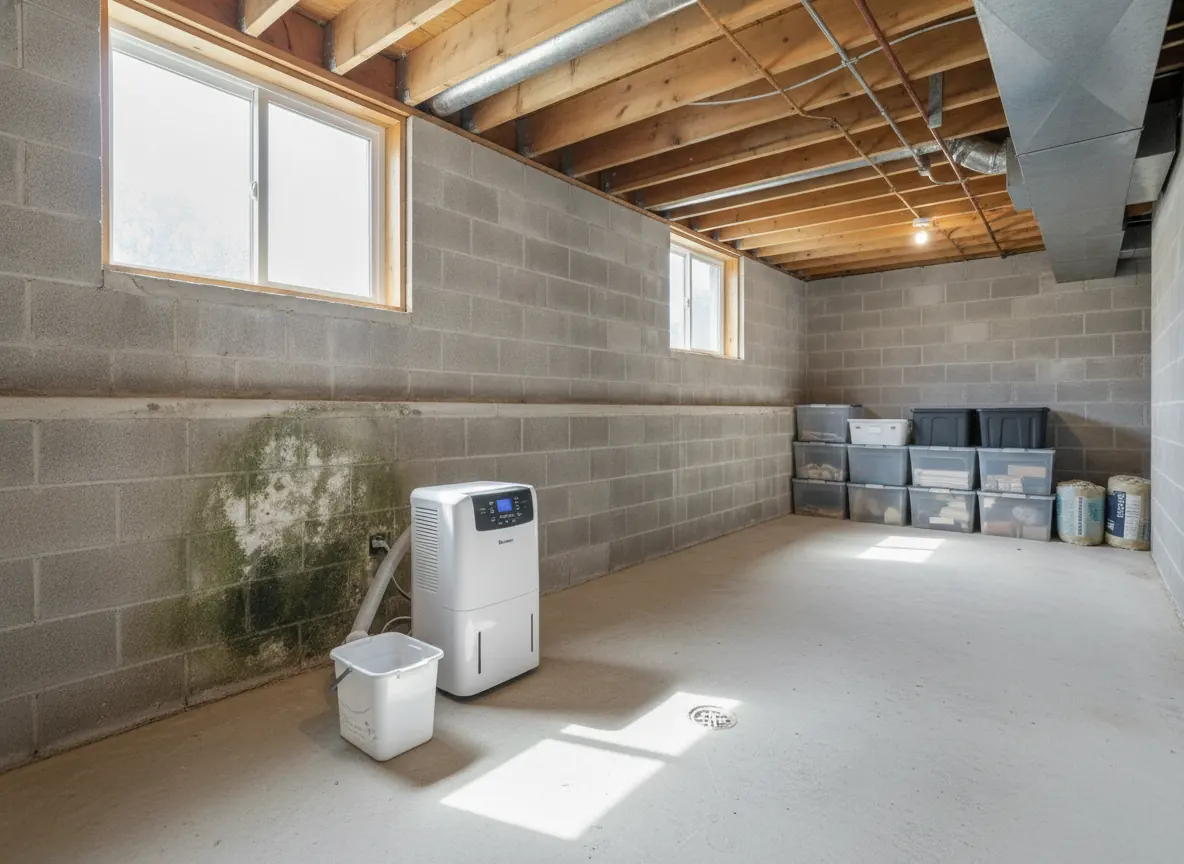
Why basements are prone to mold
A basement has soil pressed against its walls and floor, and it is usually the coolest part of the house. That combination makes it easy for moisture to collect, whether it seeps through block walls, comes up through the slab, or condenses out of humid air.
Huntsville's climate adds to it. NOAA's 1991–2020 normals for Huntsville International Airport show 54.29 inches of rain a year, with December through March the wettest stretch, and average summer dew points around 66–70°F. As general building science, muggy summer air can condense on cool basement walls, pipes and ducts.
Signs of a basement mold or moisture problem
- A persistent musty or earthy smell.
- White, chalky deposits (efflorescence) or damp patches on block or concrete walls.
- Spotty growth on drywall, paneling, baseboards or stored boxes.
- Peeling paint, warped flooring or carpet that feels damp.
- Water after heavy rain, or a sump pump that runs often.
Water doesn't only reach homes in flood zones. The City of Huntsville says that between major floods, over 90% of drainage complaints come from residents outside the floodplain, many on the sides of local mountains. Much of the area also sits on limestone. Huntsville grew up around Big Spring, a karst spring, and limestone terrain means groundwater moving through rock and soil; it's a reasonable inference that basements in such areas can see seepage, though that alone doesn't cause mold.
How basement mold remediation typically works
Identify the water source
Seepage, a plumbing leak, condensation and poor grading each need a different fix. A moisture-focused inspection can help sort them out.
Contain the area
For larger areas, companies typically use plastic sheeting and HEPA air filtration so spores don't travel upstairs through stairwells and ducts.
Remove what can't be saved
Moldy drywall, insulation, carpet and paneling are usually cut out and bagged. ADPH says materials that are wet and cannot be thoroughly cleaned and dried should be discarded.
Clean and dry
Concrete, block and framing are cleaned and dried, and humidity is brought down, often with a dehumidifier.
Fix the moisture
This might mean drainage or grading corrections, gutter extensions, a sump pump, sealing or a dehumidifier. The EPA warns that if you clean up mold but don't fix the water problem, the mold will most likely come back.
The EPA says that if the moldy area is less than about 10 square feet, a homeowner can usually handle the cleanup. Larger areas generally call for a professional. Learn more in our 10 square foot rule guide.
Typical basement mold costs
Typical national ranges from This Old House (2026), Fixr (2025) and Bob Vila (2024) — estimates, not quotes.
| Item | Typical range |
|---|---|
| Basement mold remediation | $500–$4,000 |
| Per square foot | $10–$30 |
| By size: 100 / 200 / 500 sq ft | $1,000–$2,500 / $2,000–$5,000 / $5,000–$12,500 |
A finished basement with drywall, carpet and framing to remove costs more than an unfinished one with growth on bare block. Waterproofing and drainage work are usually priced separately. See the cost guide for more.
Before you hire
ADPH says Alabama has no mold licensing or certification for remediation contractors. If the job includes rebuilding a finished basement, HBLB licensing applies to residential repair or improvement work over $10,000. Older homes may also raise asbestos or lead-paint rules when walls and flooring are disturbed. This is general information, not legal advice.
ADPH suggests looking for IICRC-certified firms; ask any company for its training and certifications, insurance, and an HBLB license number for rebuild work over $10,000. Get the moisture fix spelled out in the written scope.
No basement, but damp under the floor? See crawl space mold and encapsulation. Basement flooded after a storm? See water and storm damage mold. Ready to compare? Request free basement mold quotes. We usually reply the same day.
Basement mold questions
What causes mold in a basement?
Basement mold grows where moisture collects: water seeping through block walls or the slab, plumbing leaks, poor grading or gutters that dump water near the foundation, and humid air condensing on cool surfaces. The fix depends on the source, and the EPA notes mold will most likely return if the water problem isn't fixed.
How much does basement mold removal cost?
Typical national ranges put basement mold remediation at $500 to $4,000, or roughly $10 to $30 per square foot. These are estimates, not quotes. Finished basements with drywall and carpet to remove usually cost more, and waterproofing or drainage work is generally priced separately, so compare written quotes.
Will a dehumidifier get rid of basement mold?
A dehumidifier can lower humidity and help prevent new growth, but it does not remove mold that is already growing. Existing growth usually needs cleaning or removal of affected materials, and water coming through walls or the floor needs its own fix. A dehumidifier is often one part of a larger plan.
Can I clean basement mold myself?
The EPA says a homeowner can usually handle a moldy area smaller than about 10 square feet. Larger areas, mold behind finished walls, or repeated flooding are reasons to call a professional. ADPH says people with mold allergies or asthma should not clean moldy materials. Talk to a doctor about any health concerns.
Seeing or smelling mold? Get a clear plan.
Free, no-pressure quotes across Huntsville, Madison, Decatur, Athens and North Alabama.